|
|
|
|
|
Montana’s biggest utility is about to get a whole lot bigger. The Public Service Commission voted this week to support NorthWestern Energy's merger with South Dakota-based Black Hills Corporation. The $15.4 billion deal will create a new utility, Bright Horizon Energy, which will provide electric and natural gas services to more than 2 million customers across Montana, Wyoming, Colorado, South Dakota, Nebraska and Arkansas. NorthWestern will be a subsidiary of Bright Horizon.
That’s what we know. But after two and a half hours of public comment — most of it opposing the merger — and a narrow 3-2 vote ratifying the agreement, it seems the merger has left many with more questions than answers.
For instance:
From Kristin Wing of Thompson Falls: “Data centers require enormous amounts of electricity and substantial investments in generation, transmission and infrastructure. Who pays? Who assumes the risk if the project is abandoned, delayed or fails to use the electricity it promised?”
From Billings resident Mary Beth Beaulieu: “What will that mean for Montana's electric bills over the next two to five years or longer? We're told that there will be merger savings. We've heard that before, but where are the enforceable guarantees that these savings will reach Montana consumers?”
From Debbie Adams of Livingston: “Do we even really need these data centers? I mean, I don't think Montanans need these data centers. I think we're doing just fine without them. So why do we let other people come in and tell us that this is something that is viable or financially good for our state?”
PSC Commissioners Randy Pinnoci and Jeff Welborn, who both voted against the merger, said they saw no benefit to existing NorthWestern customers. Commissioner Jennifer Fielder voted yes, saying that a larger utility could save money through reduced operating costs or take out loans at lower interest rates, and that those savings could be passed on to ratepayers.
Commissioners Kirk Bushman and Annie Bukacek joined Fielder in voting yes on the merger, saying that there are adequate protections already in place for ratepayers and that those will continue under a merged utility.
NorthWestern Energy’s existing customers pay less than the national average, but higher rates than others in this region, and rates have steadily increased in recent years. The most recent cost increase was approved by the PSC last winter.
So, if you’re wondering whether a merger could mean a price hike, the answer is it’s too soon to say.
Whether the merger will mean supplying more power to data centers leaves a similarly unsatisfying answer of we don’t know. The PSC still has to decide on proposed rules that would protect customers from rate increases driven by massive power consumers.
Data centers were a focal point of the public comment Tuesday, but both Commissioners Fielder and Pinocci said regulating data centers is not under the PSC’s purview.
Anne Hedges, with the Montana Environmental Information Center, however, has a different take.
“The PSC has a critical role in the regulation of data centers,” Hedges told MTFP. “Existing Montana law prohibits a utility like NorthWestern from providing electricity to data centers unless the PSC finds that it will not adversely impact the utility's other customers. … If that's not regulating data centers, I don't know what is."
|
|
|
|
|
|
|
|
By the Numbers 🔢
|
 |
|
Intermountain Health’s St. Vincent Regional Hospital in Billings is going to be big — really big. Contractors broke ground in 2025 on the $900 million expansion — yes, you read that right — and aim to finish the 737,000-square-foot building in 2029. The new hospital appears slated to be Montana's tallest building.
Besides the miles of plumbing, below are some other fun facts about the project's enormity, drawn from an Intermountain Health fact sheet and MTFP reporting.
It contains:
-
1.5 miles of cabinets
-
Electrical wiring in the building that, if stretched out, would run from Billings to Bozeman six times.
-
Enough steel to equal the weight of 2,700 cars
-
1,700 truckloads of cement
-
14,000 gallons of interior paint
-
600+ workers at the peak of construction
-
230 concrete pillars to anchor the building, which are drilled 30 feet to 80 feet down in order to reach bedrock.
You can read more about the project in my story here. |
|
|
|
|
|
|
Phoebe Tollefson
Reporter |
|
|
|
|
|
|
“If we're being honest, in Montana, we love our sports and our activities. They keep us going. They are the pulse of our communities, our small towns. The whole town shuts down, and we're all at the game Friday nights, whether it's in the gym, on the field or at the track.”
— Josh Patterson, superintendent of Beaverhead County High School
|
High diesel prices are draining school budgets in rural parts of the state. That creates difficult decisions for superintendents like Patterson, who are grappling with how to pay for everyday bus travel while also getting students to extracurricular activities like football games and speech and debate meets. It’s not easy. Patterson, for one, noted that he considered spending money meant for school supplies and textbooks on diesel to get his school’s football team to a state playoff game in Whitefish, a 12-hour round-trip bus ride away.
The cost of diesel skyrocketed in March, days after the U.S. launched missiles at Iran. The prolonged conflict, along with Russia’s fickle participation in international markets, has kept diesel prices around $6 a gallon for the last several months. That spike has a more pronounced effect on rural schools, where buses regularly travel hundreds of miles a day.
Patterson said the district ultimately dipped into its activity fund for the trip to Whitefish. He is still concerned, though, about how the school is going to pay for travel the rest of the school year.
“ The biggest thing we didn't account for is just the doubling of the cost of fuel when it comes to activity transportation,” Patterson told MTFP. “ We have a budget for half of what we are seeing now because we was thinking fuel was gonna be around anywhere from $3.25 to $3.50, not $5.50.”
You can read more about how rural school districts are dealing with higher-than-expected fuel costs in our story here.
|
|
|
|
|
|
|
For the second consecutive year, Montana has been awarded millions in federal funds for rural health care services and infrastructure.
This week, Gov. Greg Gianforte and the Department of Public Health and Human Services Director Douglas Harrington announced the state’s award of $239.7 million through the Rural Health Transformation Program. The second annual grant in the five-year program was the third-highest nationwide, behind Texas and Alaska, according to the Centers for Medicare and Medicaid Services.
The $50 billion Rural Health Transformation Program was included in House Resolution 1, also known as the One Big Beautiful Bill Act, to help offset the potential impacts of significant Medicaid cuts on rural hospitals. The program focuses on new ways to improve access to rural healthcare and help providers build financially sustainable operations. The money can’t be used to fund existing services or most renovations.
The rollout of the first round of Rural Health Transformation funding was not without snags, and some healthcare leaders have voiced concerns it may lead to service cuts or downsizing.
Last year, Montana was awarded $233 million. The state has used the money to contract with consultants and healthcare industry groups; award grants to rural EMS agencies for ambulance and equipment upgrades; and establish its Rural Center of Excellence, which will assess rural facilities and make recommendations, according to the health department.
The second round of funding will be used to produce those community assessments and recommendations, provide the first wave of electronic health record modernization grants to help rural providers upgrade systems, expand efforts in tribal nations and begin workforce development initiatives to improve training, recruitment and retention.
“The increased award reflects our first-year performance, a clear plan for year two, and the hard work of Montana’s RHTP team,” Harrington said in a press release. “In the first year, we built partnerships, committed funds, and put tools in place to support long-term improvements. In year two, we will build on that foundation to help rural facilities strengthen their operations, modernize health records, and expand access to care in rural and tribal communities.” |
|
|
|
|
|
Not long after Jon Tester accepted an advisory role with AI defense contractor Palantir, the former U.S. senator’s role on the progressive podcast "Grounded" ended.
"Grounded" producer Maritsa Georgiou announced the split Tuesday, explaining that Palantir's reputation clashes with the show's direction.
“As many of you probably know or are learning, former Sen. Tester has taken an advisory role at Palantir,” Georgiou said. “Now, while his intentions are to help move that company forward in a positive direction, I feel that the company's past actions do not align with the work that we do here at 'Grounded.'”
Palantir announced its arrangement with Tester shortly after Democrats won control of Congress. Congressional Democrats, who take control of Congress in January, have previously accused Palantir of providing the federal government with surveillance technology to monitor Americans, which the company denies.
Georgiou said "Grounded Podcast" will continue without Tester and is gathering audience feedback on social media about its future direction. She told Montana Free Press that she has Tester’s blessing to continue and that they remain friends.
Launched in February 2025 when both hosts were between jobs, the show offers expert-driven context on complex current events. Across 140 episodes, it has featured high-profile guests, including historian Heather Cox Richardson, former U.S. Ambassador to Russia Michael McFaul, journalist Rachel Maddow, former U.S. Transportation Secretary Pete Buttigieg and former Obama campaign manager Jim Messina. Lesser-known experts have also appeared, such as Ellie Leonard, who discussed deciphering redacted Epstein files.
Georgiou has also contributed investigative reporting, covering U.S. Immigration and Customs Enforcement protests in Minneapolis and the Department of Homeland Security's plans to convert a 1-million-square-foot warehouse into an ICE detention center in Social Circle, Georgia.
“I want to keep going. I want to keep staying grounded in real conversations and interviews and bringing people on who are change-makers and doing things in their communities and amplifying those voices and helping all of us kind of navigate the chaos happening around us,” Georgiou said Tuesday. “And the deal is that you, everyone here, you're the reason this community exists. And so, I want to hear from you.”
|
|
|
|
|
|
News of the News (this time, closer to home) 📰
|
|
|
|
We hope you noticed a familiar new byline in Montana Free Press this week. It belongs to Bozeman-based reporter Victoria Eavis, who contributed to our team coverage of legislative caucuses Wednesday, her first story since joining MTFP full-time on Monday.
You may remember Eavis’ byline from her freelance reporting for MTFP this spring and summer, much of which showcased her sophisticated grasp of power dynamics in the state Legislature. You can expect much more of that as Eavis joins statehouse reporters Tom Lutey and Zeke Lloyd to cover the 2027 legislative session, with a special focus on healthcare.
Prior to joining MTFP, Eavis reported for Lee newspapers’ Montana State News Bureau and the Casper Star-Tribune. We couldn’t be more excited to have her on the team and working for you. Please reach out — veavis@montanafreepress.org — with a warm welcome and your most tantalizing tips.
|
|
|
|
|
|
Snapshot 📸
|
 |
|
|
|
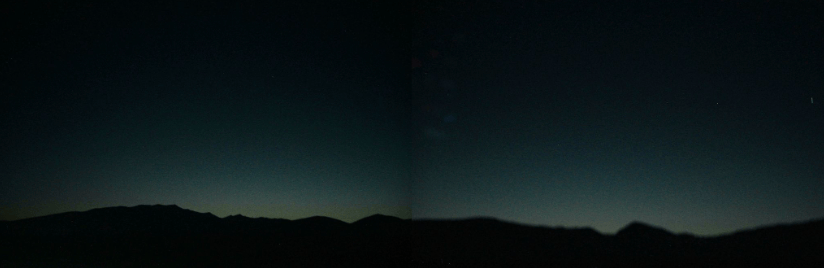
I was somewhere between Anaconda and Deer Lodge on my way home from Missoula last week as the dust settled from the election. The exhaustion of many long days weighed on me, but as I looked out my windows at the last light over the Pintlers (one of the most overlooked ranges in Montana, in my opinion), I felt the gratitude for working and living in such an incredible state wash over me. I pulled off the highway to capture two images of that moment, which I stitched together in Photoshop.
|
|
|
|
|
Lauren Miller
Report for America/Catchlight Local Photojournalist |
|
|
|
|
|
|
|
|
On Our Radar 
|
|
|
Ellis — As the days get shorter and shorter, I miss my garden. That time spent outside, free of technology and focused on a single task, always leaves me in a better headspace after a workday. This article about the health benefits of hobbies that involve working with your hands, like gardening, has me extra motivated to find other activities for the colder months. Enter visible mending! It’s a delightful euphemism for patching holes in clothes, and I am slowly learning how to use a tiny loom like this to weave little patches. I’m not saying I’m good at it, but it’s been a lot of fun to learn!
Lauren — I recently decided I would make new stockings for my whole family. The ones we have are old, ratty and falling apart. The only catch: I’m not distinctly crafty. I have access to a sewing machine (that I don’t really know how to use), can knit very basic stuff and am handy with photography, but that’s about it. Oh, also, I have a month to make six stockings. So, dear readers, please send me ideas for how best to accomplish this without it looking like a first-grader did it (no shade to first-graders).
JoVonne — Last week, video gaming company Nintendo re-released the long-anticipated remastered version of one of its classic games, “The Legend of Zelda: Ocarina of Time.” The Zelda game first came out in 1998 and became one of my favorite pastimes. Now, the remake, which broke sales records at Nintendo, will most likely take up my free time again, and I’m feeling the nostalgia.
Zeke — I was moved by Veterans Day coverage this week. Allow me to recommend a KRTV story and a photo essay from The Associated Press.
Mara — I’ve written before about my deep appreciation for breakfast tacos. But I didn’t realize until recently how much I’d been missing out on birria breakfast tacos. The stewed Mexican beef is traditionally eaten for breakfast — in taco, quesadilla, bowl or burrito form — often accompanied by a cup of warm broth. It’s simply too good to be allowed.
*Some stories may require a subscription. Subscribe!
Lowdown is edited by Nick Ehli, with additional copy editing by Mara Silvers. |
|
|
|
|
|
|