|
|
|
|
|
Roberto Orozco-Ramirez’s lawyers filed a motion to dismiss the charges against him. Here’s what it says.
|
|
Hi everyone, and thanks for reading The Arrest That Shook Froid! It’s been great hearing from all of you at border@montanafreepress.org. |
 |
|
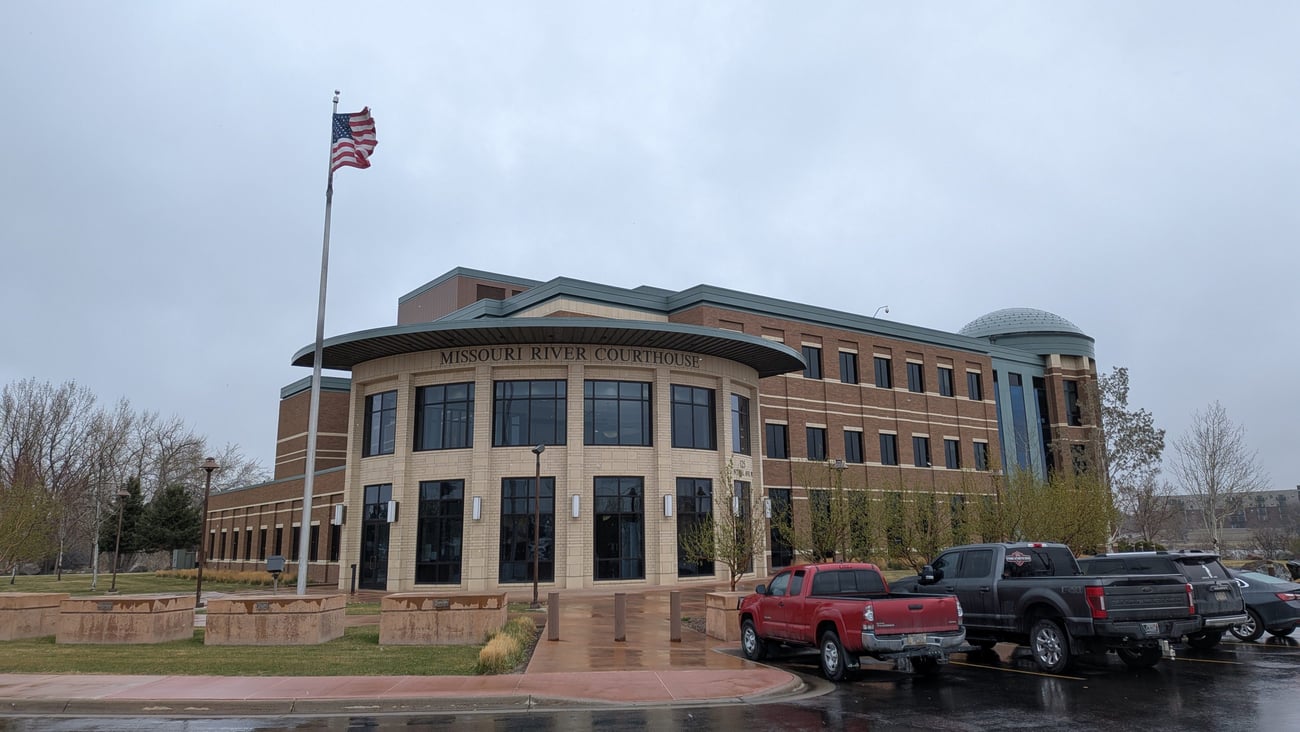
The U.S. District Courthouse in Great Falls. Credit: Matt Hudson, MTFP
|
|
There have been some major developments in the case and lives of the Orozco-Ramirez family, according to documents filed this week.
On Thursday, Roberto Orozco-Ramirez’s public defenders asked a federal court to dismiss the illegal reentry charge against him, arguing that his prior removal from the U.S. was “invalid” and “unconstitutional.” The government’s charging documents allege that Orozco-Ramirez was initially removed from the United States by U.S. Immigration and Customs Enforcement (ICE) in 2009. But Orozco-Ramirez’s lawyers say that the 2009 removal violated his "statutory, regulatory and due process rights.” They also allege he was not made aware of options for relief — like obtaining asylum status — for which he may have been eligible.
This legal approach is fairly common, I learned while reporting on illegal reentry charges in February. Lawyers told me that, in general, the charge is easy to prove and hard to fight. But the most common way to dispute the charge, they said, is by challenging a client’s initial removal from the U.S., arguing that the person’s constitutional rights were violated during the deportation process.
That’s exactly what Roberto’s lawyers appear to be arguing in their motion to dismiss.
|
 |
|
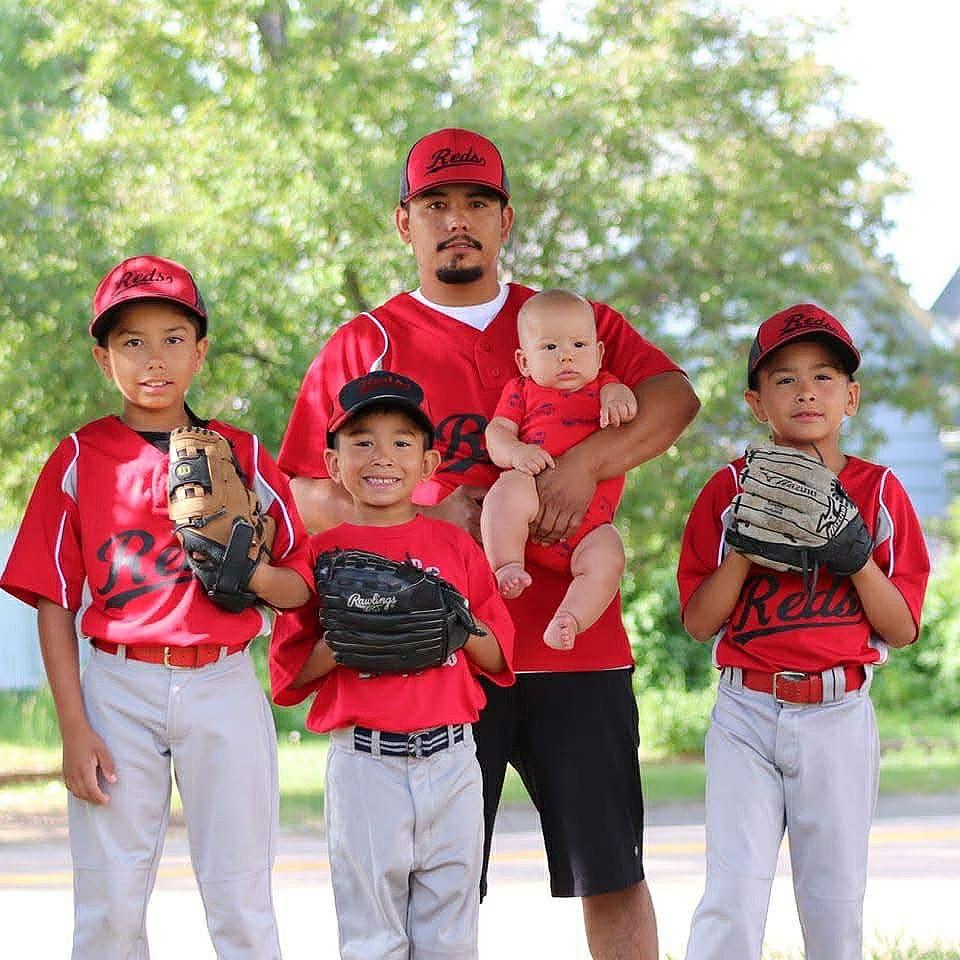
Roberto Orozco-Ramirez, a business owner in Froid, Montana, stands with his four children. Credit: provided.
|
|
|
|
|
|
|
But first, what happened in 2009?
|
|
On Sept. 15, 2009, a sergeant with Cache County Sheriff’s Office in Utah and an ICE agent knocked on the door of a house in Logan, looking for Roberto’s brother Luis according to court documents.
Luis had been flagged for investigation as part of Operation Community Shield, a national effort aimed at identifying and removing undocumented immigrants with gang affiliations or criminal pasts. An ICE official has described the goal being “to target violent gang members and their associates, to eradicate the violence they inflict upon our communities and to stop the cash flow to transnational organized crime groups operating overseas.” (A report by the New York Immigration Coalition noted that Operation Community Shield’s official criteria for gang affiliation was often unreliable and inconsistent, ultimately resulting in “the increase of unwarranted and unsubstantiated gang allegations being used as a basis to detain immigrants, or to deny applications for benefits such as Special Immigrant Juvenile Status or asylum.”)
Roberto, who was 26 years old at the time, answered the door and allowed the officers inside, documents say.
Officers reported that they found pictures in one room “showing Roberto and Luis with firearms, dressed in gang attire and displaying gang signs.” Roberto told officers he and Luis were “playing around” in those images. Officers also found marijuana and “gang attire” in other bedrooms.
When Luis showed up at the house later, officers reportedly found three seemingly fraudulent identification cards in his wallet — a social security card, driver’s license and a U.S. permanent resident card. Luis was identified as being in the country illegally, and federal records showed that he had been deported previously.
In arrest records, officers wrote that Luis and Roberto were “members of the Sureños 13 gang,” a Mexican-American street gang. They did not include further information on whether anything — beyond the photo and clothing — was used to make the gang affiliation determination. But it’s the record created that day that came back to haunt Roberto 17 years later when Border Patrol stated, during his arrest in Froid, that he “was identified as a Sureños gang member when initially encountered in Logan, Utah.”
The Department of Homeland Security reported in 2016 that since Operation Community Shield began in 2005, local, state and federal officers made more than 40,000 gang-related arrests. Lawyers and immigrant advocates have also accused the program of contributing to the wrongful detention of innocent immigrants because of racial profiling and other stereotyping. The New York Immigration Coalition reports noted that ICE implemented criteria for flagging someone as gang-affiliated in irresponsible and inconsistent ways, potentially identifying someone as being part of a gang because they came from a country or region with a lot of gang activity. As I wrote in a previous newsletter, Roberto, 42, is from Michoacán, a state in western Mexico with a lot of drug cartel activity.
In 2009, officers arrested Roberto for being in the country illegally. Luis was arrested for illegal re-entry. Luis was also charged with identity theft and possession of marijuana. Neither faced any charges related to being in a gang or violent activity.
Roberto was taken to a detention facility in Weber County. He signed a stipulated order of removal, meaning he agreed to removal and waived his right to a hearing. He was later removed from the U.S. |
|
|
|
|
|
A recent death and his lawyers’ argument
|
|
In their motion to dismiss, Roberto’s lawyers say his family sent him to the U.S. as a minor around 2000 because in Mexico his family was “the direct target of extreme violence.” The documents offer details about the dangers the family faced not only back then, but as recently as this month. On March 10, while Roberto was in jail in Cascade County, one of his other brothers was murdered in Mexico, according to court filings. (When we know more about that, we’ll share in future newsletters.)
According to the filings, in the late 1990s and early 2000s, Roberto’s father was kidnapped, one step brother was kidnapped and beaten and another step brother disappeared likely as a result of kidnapping.
Roberto’s lawyers argue that these sorts of threats can make a person eligible for asylum status. But he was not made aware that he was likely eligible for immigration relief that would have helped him avoid deportation.
Roberto’s lawyers allege that when he was arrested in the Operation Community Shield sweep, a special agent in Utah took about five to 10 minutes to review immigration documents with Roberto, whose English skills were limited at the time. Roberto was reportedly led to believe that if he signed various documents, he could voluntarily leave the U.S. and be allowed to return in the future.
“[The special agent] did not inform Roberto that the document he signed functioned like a removal order and waived all his rights to a regular removal proceeding,” court documents allege.
Immigration lawyers have told me that undocumented immigrants may be pressured by officers to sign such removal orders, without understanding the consequences.
Documents note that while Roberto asked for counsel, he was not given a list of attorneys or organizations that could help, and he never saw an immigration judge, something immigration attorneys have told me are common issues.
Though family ties are often considered in immigration proceedings, documents allege that a special agent incorrectly stated Roberto had no family in the U.S., though his child, Roberto Jr., was a U.S. citizen. Roberto’s second son, Eduardo, was born the day before the mechanic was deported from the U.S. in 2009. |
 |
|
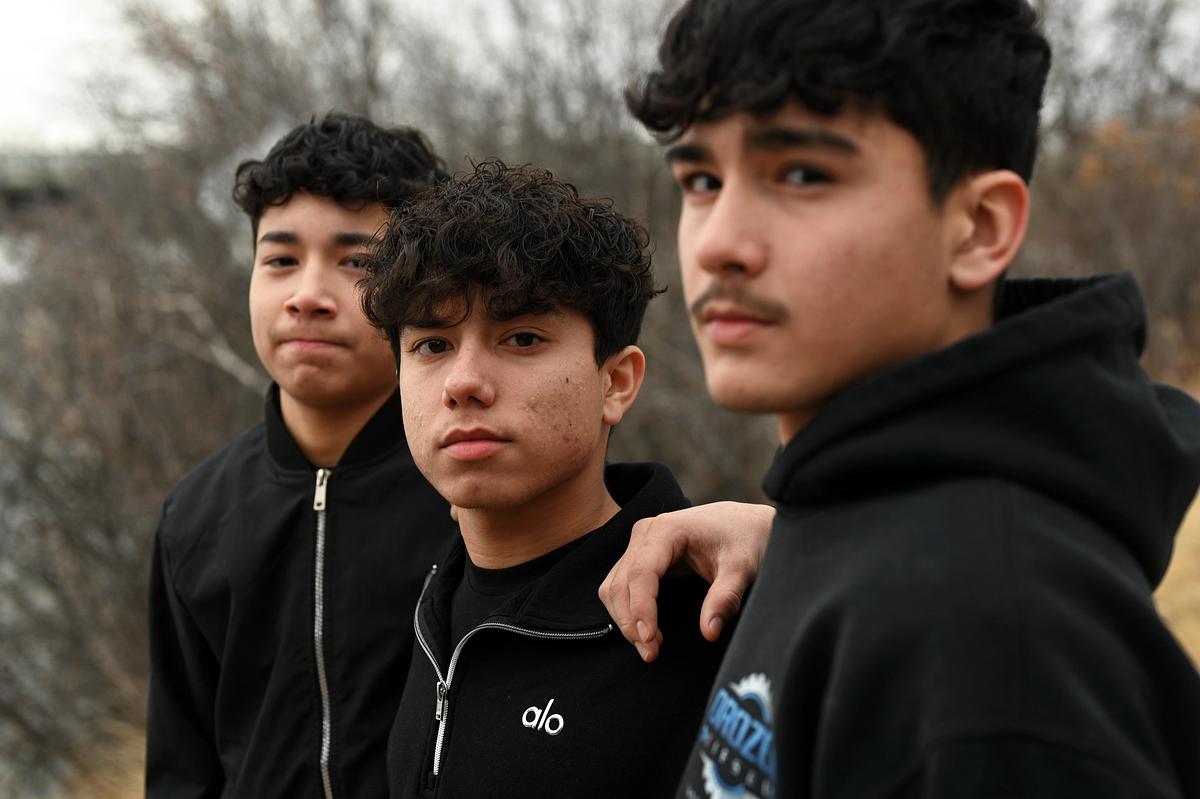
Three of Roberto Orozco-Ramirez’s sons, Eduardo, Roberto and Aaron, stand together near the Missouri River Courthouse after Orozco-Ramirez’s initial appearance Jan. 28, 2026, in Great Falls. Credit: Lauren Miller, Montana Free Press, CatchLight Local/Report for America
|
|
Lawyers also emphasize that Roberto did not have a criminal record and instead “demonstrated long term stability and responsibility.”
“The outcome of the removal proceeding could plausibly have been different had due process been afforded,” Roberto’s lawyers argue in their motion to dismiss.
A public affairs officer for the U.S. Attorney’s Office, which is representing the federal government in Roberto’s case, declined to offer comment. Rachel Julagay, the public defender representing Robert, also declined to comment on specifics of the case.
Lawyers on behalf of the federal government have 14 days to respond. After that, Roberto’s lawyers will have seven days to reply. The court will then review both arguments and either grant the motion to dismiss, deny it or issue a partial ruling. Until then, Roberto remains in limbo.
|
|
|
|
|
|
In other immigration news …
|
 |
|
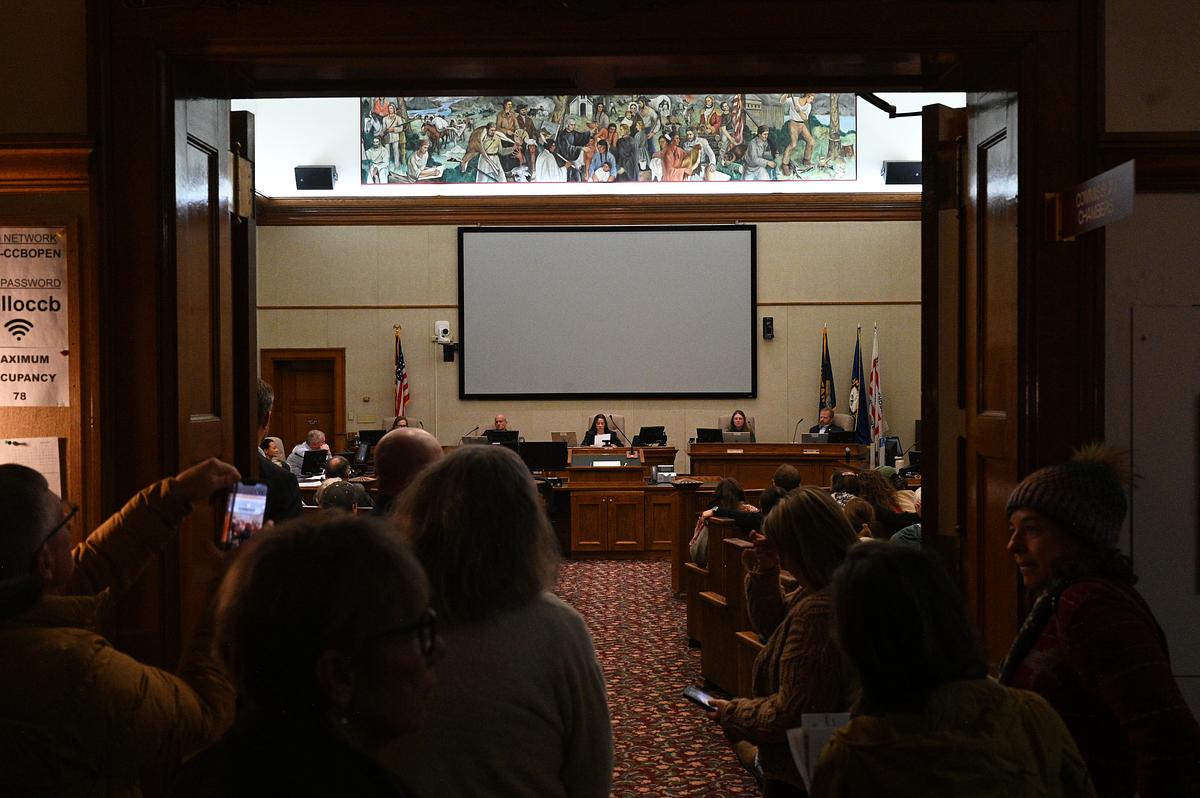
Helena mayor Emily Dean opens the city council meeting, where the council will vote on a resolution requiring U.S. Immigration and Customs Enforcement officers to identify and unmask themselves, on Jan. 26, 2026, at the City-County Building. Credit: Lauren Miller, Montana Free Press, CatchLight Local/Report for America
|
|
About two weeks ago, President Trump fired Homeland Security Secretary Kristi Noem and said he would name Oklahoma Sen. Markwayne Mullin to replace her. Noem has been the face of Trump’s campaign promise to conduct the largest deportation operation in American history. It’s unclear how her departure will affect federal policies around immigration.
In Montana, the state capital continues to battle with the attorney general over immigration enforcement. I’ve spent most of this week reporting with my colleague JoVonne Wagner on how we got here and where the conflict is headed.
The dispute has implications not just for Helena, but for communities across the state grappling with immigration enforcement. Bozeman Mayor Joey Morrison told us that he’s keeping a watchful eye on the dispute in Helena.
“It’s been frustrating as another mayor of a city that is often in the sights of our state administration to see just patently political bluster on all this,” he said. “I think it’s a clear message to try to intimidate other cities, to stop them from doing something similar.”
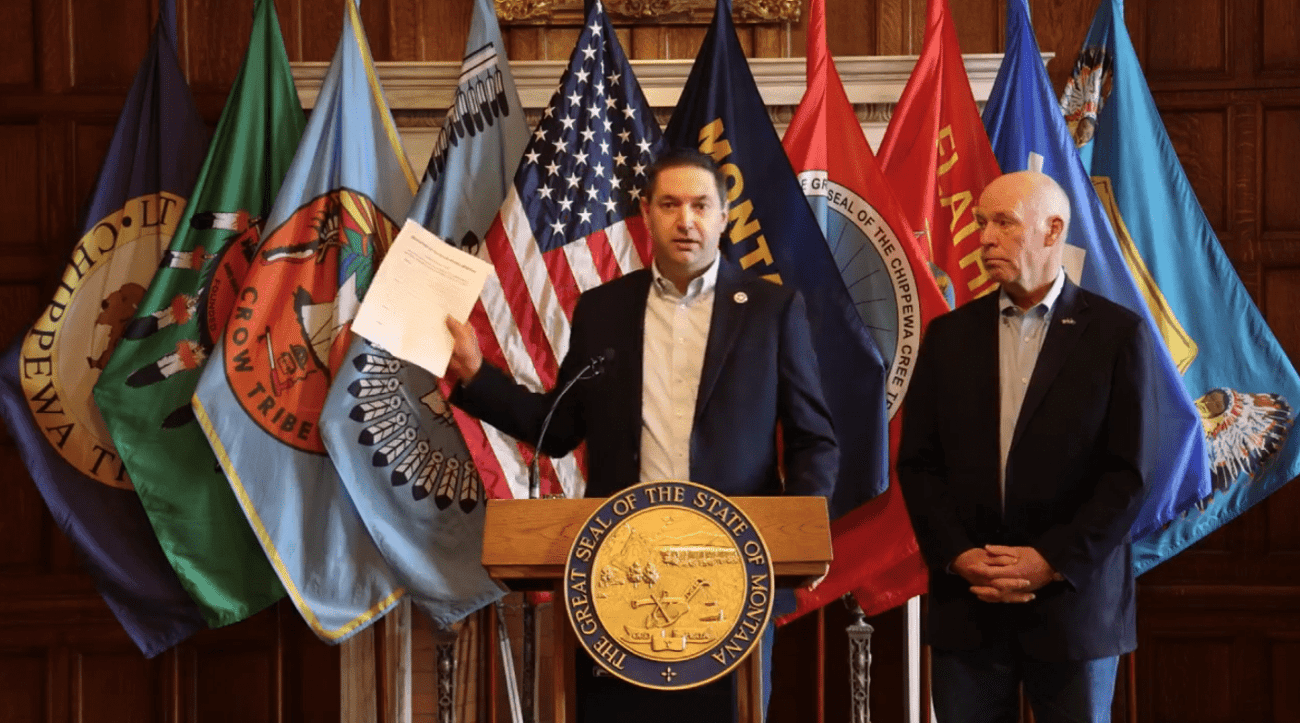
To recap: Following months of public pressure from residents, in January, Helena’s City Commission passed a resolution stating it will not assist ICE agents. In a joint press conference about two weeks later, Attorney General Austin Knudsen and Gov. Greg Gianforte claimed that the resolution violated a 2021 Montana law banning cities from giving refuge to illegal immigrants. And last week, Knudsen issued a cease-and-desist, saying the city of Helena must change a resolution or face a lawsuit from the Montana Department of Justice.
In his letter, he stated, “In 2024, my office secured a conviction of an illegal alien who stabbed another man to death. And Mexican drug cartels have flooded Montana with fentanyl and meth — and also set up operations in Indian reservations. Montana law enforcement must act — including cooperating with lawful requests by the U.S. Department of Homeland Security (DHS) — to keep our communities safe.”
Knudsen gave city officials a deadline of 15 days to explain how each section of the resolution complies with state law. He also asked for copies of emails between city officials related to the resolution. |
 |
|
Attorney General Austin Knudsen, flanked by Gov. Greg Gianforte at a press conference at the state Capitol Feb. 11, holds a copy of Helena City Resolution 21062, passed Jan. 26, 2026, which restricts how Helena City Police interact with federal immigration officials.
|
|
A special meeting at which the Helena City Commission will discuss possible changes to the resolution is set for Thursday, March 26, at 5:30 p.m. The meeting will be held at the Helena Civic Center and is open to the public.
Look out for that story next week on our website.
|
|
|
|
Reader dispatches
|
|
As always, I’ve loved hearing from all of you. I’ve received a lot of messages in the vein of this question from Benilde Howlett of Helena: "Once a person is here illegally, what are the options open to them to become a legal citizen? How long does it take to become a legal citizen in each option? Is there a statute of limitations where if you've been here a certain number of years, you are no longer considered illegal or is it like murder, where you can always be convicted?"
I’ve been working on a story about this, and I hope to thoroughly answer this for you in the near future.
Paul Johnson of Yaak, Montana wrote this: “What I would like to see is a reasonable path to obtain citizenship for people like Orozco-Ramirez. Now it will more than likely have very negative effects for both him and his family. Where he was the supporter of the family, now they will probably need support from the social services! Makes no sense."
Thanks for reading and please share your thoughts with the team at border@montanafreepress.org.
|
|
|
|
|
|
|