|
|
 |
|
Hi, and thank you for reading The Arrest That Shook Froid! Please share your thoughts with our team at border@montanafreepress.org.
|
 |
|
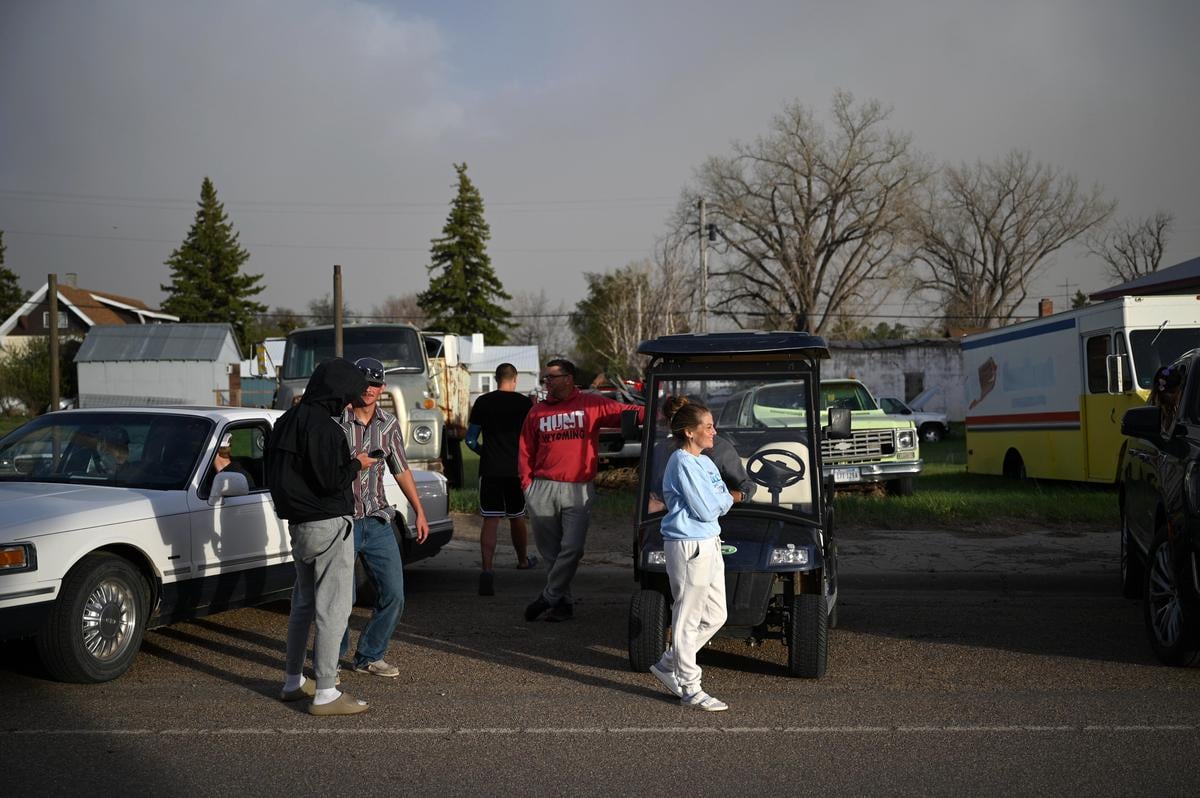
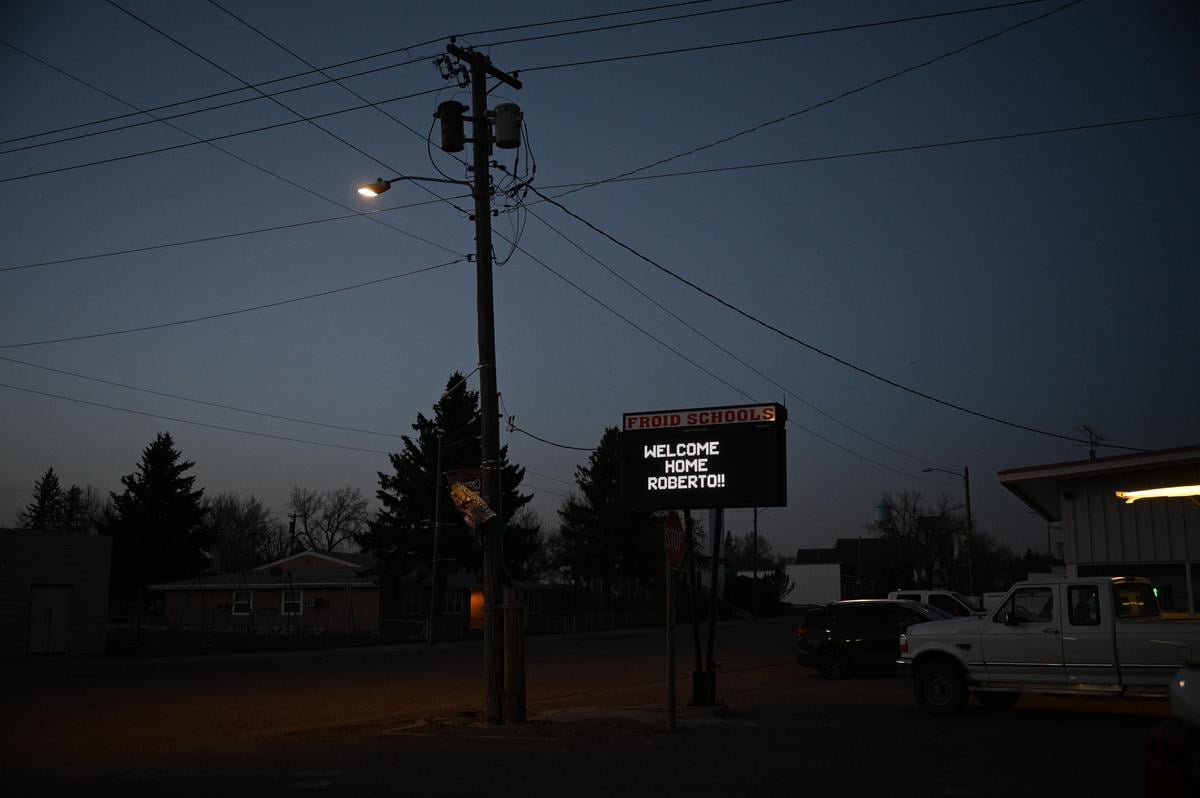
On Thursday evening at about 7 p.m., as a dust storm engulfed much of northeast Montana, more than two dozen cars lined Main Street in Froid, packed with people eager to welcome home Roberto Orozco-Ramirez.
After more than 100 days in detention centers across the West, Orozco-Ramirez was about to greet his neighbors who only recently learned that he was living in the country undocumented. On May 13, a federal judge ruled to release the diesel mechanic, siding with Orozco-Ramirez’s lawyers on their argument that his continued detention by various state and federal agencies — including ICE, Cascade County Detention Center and Acting Attorney General of the United States Todd Blanche — was unlawful.
Liz Melbourne, who lives in Brockton, about 32 miles west of Froid, stood outside her car, her hands in her pockets.
“This is what northeast Montana is like,” she said, gesturing to the people huddled in their cars as wind whipped dust into the air. “This is going to be talked about for years. I want my kids to be able to say, ‘My mom did something. She showed up.’”
About 20 minutes later, Laura Christoffersen, a lawyer who was representing Orozco-Ramirez, pulled into Froid in her white SUV. Orozco-Ramirez, who had not been home since he surrendered to law enforcement in January, sat in the back seat, wearing jeans and a gray sweater. Marvin Qualley, a local farmer and school bus driver, drove a firetruck through the line of cars, escorting Christoffersen’s car like a parade. People honked, waved and cheered.
|
 |
|
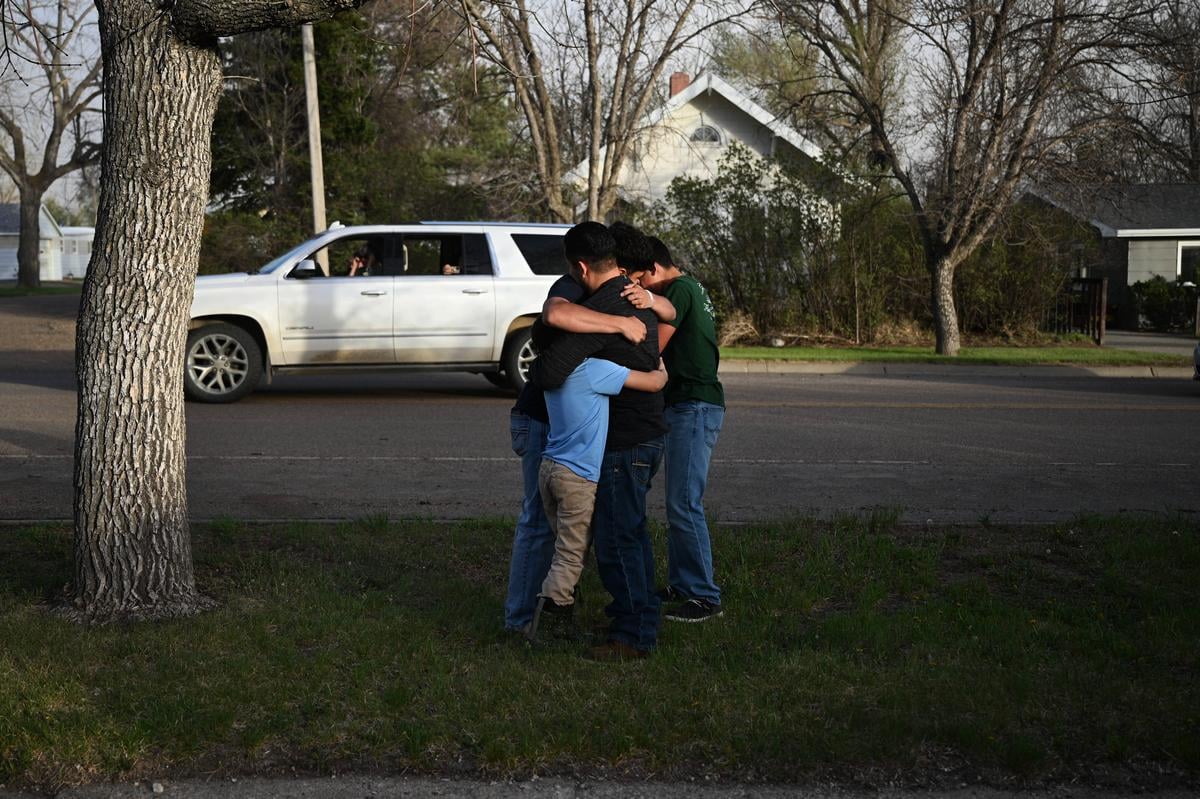
At the end of the street, Orozco-Ramirez stepped out of the car and embraced his three younger sons, who were waiting for him outside their home. They wiped the tears from their eyes.
|
|
|
|
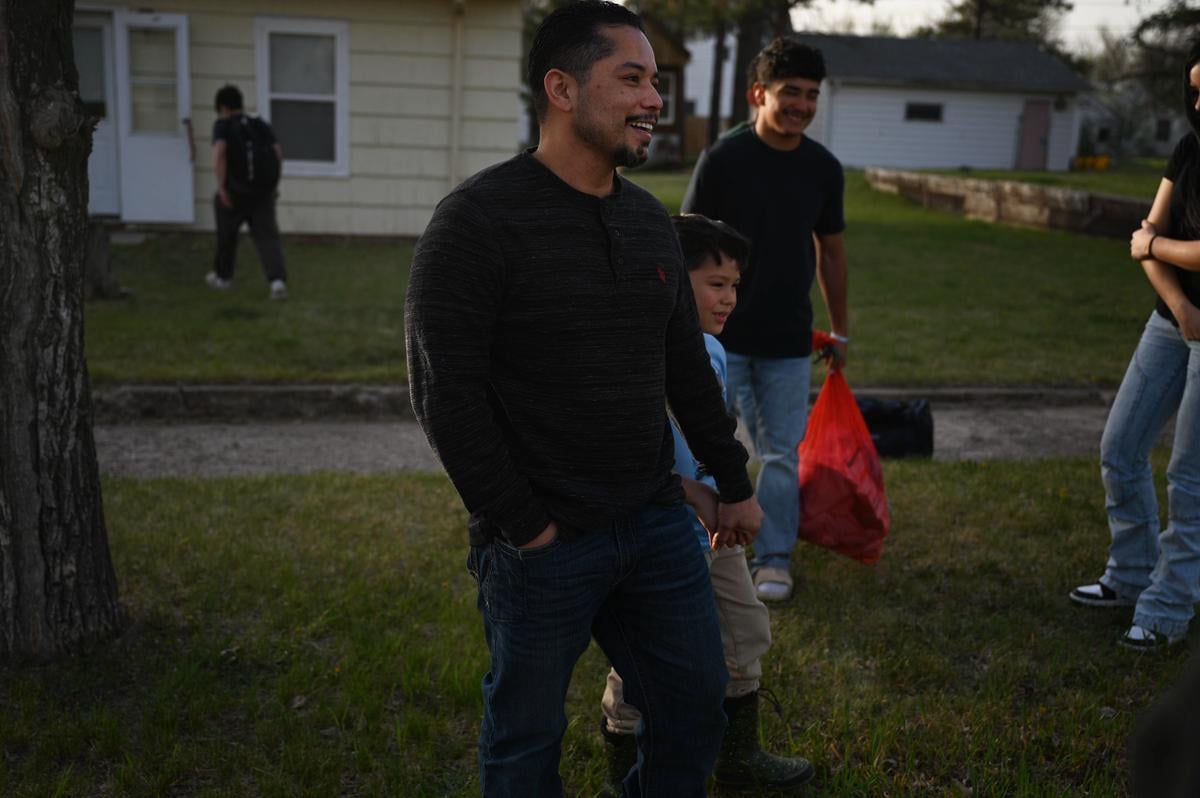
Standing outside his home, with one hand in his pocket and the other around his eight-year-old son, Orozco-Ramirez waved as his neighbors drove by.
“We love you, Orozco's!” one woman shouted from an SUV.
“Thatta boy!” a man yelled and honked as he passed.
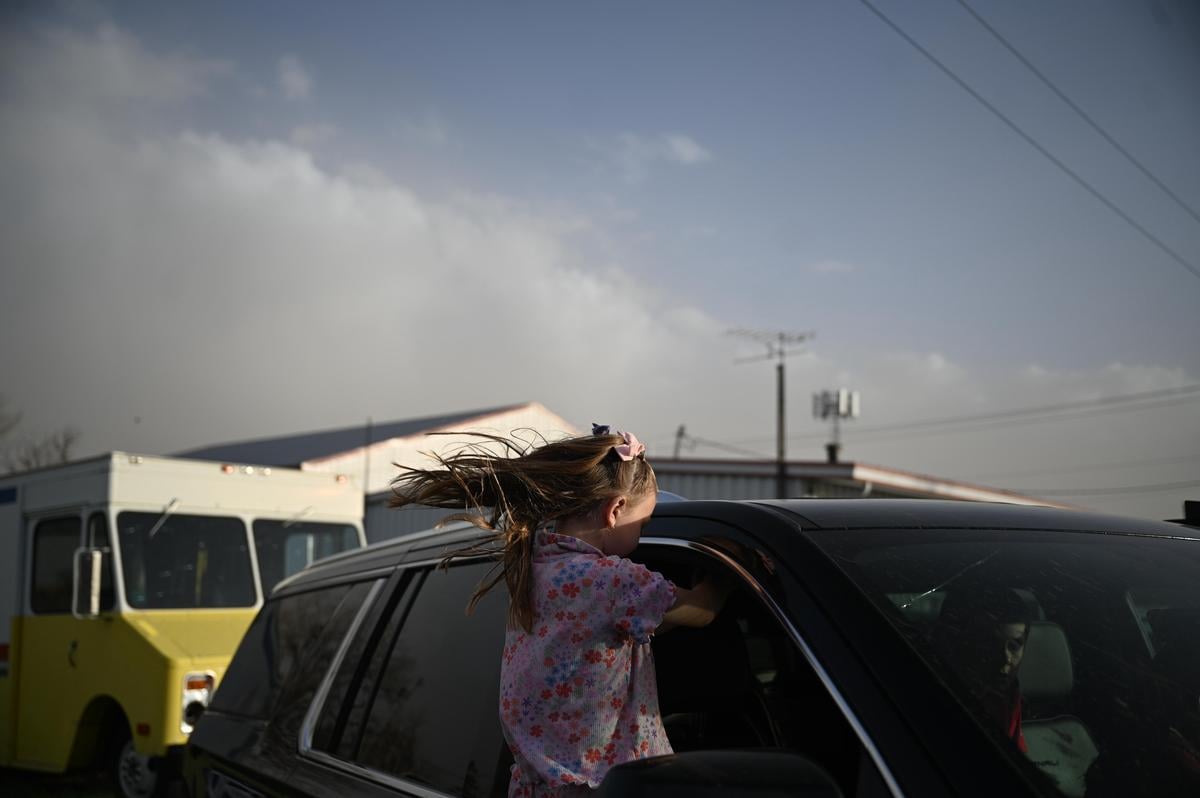
“Welcome home, Roberto!” a woman shouted from her car as children waved from the backseat. |
|
|
 |
|
As his three younger brothers beamed, Roberto Orozco Lazcano, Orozco-Ramirez’s 19-year-old son, walked over to Christoffersen, still sitting in her car. Christoffersen, who grew up in Froid, specializes in probate, oil, gas and agricultural law. Prior to Orozco-Ramirez’s arrest, she had no experience on immigration issues. But When Orozco-Ramirez surrendered to law enforcement, Christoffersen called around trying to find immigration lawyers who could help him. In the last three months, she’s also learned about immigration law and represented him in court alongside a California-based immigration lawyer.
“I’m so freaking happy right now,” Orozco Lazcano said, smiling. “Thank you so much. Like, I don’t know how I could ever say thank —”
“You don’t need to,” Christoffersen cut him off. Orozco Lazcano nodded and looked over at his dad, waving to cars as they passed.
“I’m gonna go be with my dad,” he said.
|
 |
|
|
|
|
|
|
Catching up with Orozco-Ramirez
|
|
My colleague, photographer Lauren Miller and I sat down with Orozco-Ramirez in his home the next day to discuss his experience moving between at least six detention facilities over the past few months. (You can also hear him talk about his experience in a segment produced by our collaborators at Montana PBS.)
Orozco-Ramirez said that as officials transferred him — from Cascade County Detention Center to a county jail in Idaho, to federal immigration facilities in Washington and Arizona, back to the county jail in Idaho and, eventually, back to the Cascade County Detention Center in Great Falls — he often didn’t know where he was going.
“They don’t tell you when you leave,” he said, sitting on a brown leather chair in his living room in Froid. “They don’t tell you anything. One morning, they just call you up, and that means you’re moving.”
Inmates in all of the facilities, he said, wore handcuffs around their ankles and wrists during any kind of travel. He said he was able to make phone calls in the facilities, and that he passed the time by reading and by talking to other people about their stories. In ICE facilities in Washington and Arizona, Orozco-Ramirez said he was surrounded by other immigrants; in facilities like the Cascade County Detention Center, he was housed with people charged with crimes, including homicide and DUIs. The days, he told us, felt long.
Orozco-Ramirez said that while he was detained, he thought of “self-deporting” and returning to Mexico.
“I’d be thinking, ‘I’m not going to get out of this anyway,’” he said. “I’d be out of hope.”
Self-deportation is something more people are doing amid the Trump administration’s national immigration crackdown. The Washington Post reported that from January 2025 through March of this year, immigration judges issued more than 80,000 voluntary departure orders, a number that is at least seven times as high as it was in the last 15 months of the Biden administration.
What kept him going, Orozco-Ramirez said, was the overwhelming support from Froid. Community members raised money to support his family, traveled hundreds of miles for his court hearings and advocated for his release from detention.
“In another situation, I’d probably sign the deportation and leave to be honest,” Orozco-Ramirez said. “That’s what I was planning to do. But having people calling me, saying ‘No, no, don’t do that. We’re going to get you out of there.’ I told my wife, ‘You know what, they’re stepping up for us. I will hold out a few months if I have to.’”
Returning to Froid, rather than to Mexico, he added, means he gets to keep working at Orozco Diesel, the business he built from the ground up. (U.S. immigration law does not explicitly prohibit undocumented immigrants from owning a small business.)
“I get to go back to what I’ve been doing,” he said. “I don’t have to start over.”
|
 |
|
What’s next for Orozco-Ramirez?
|
|
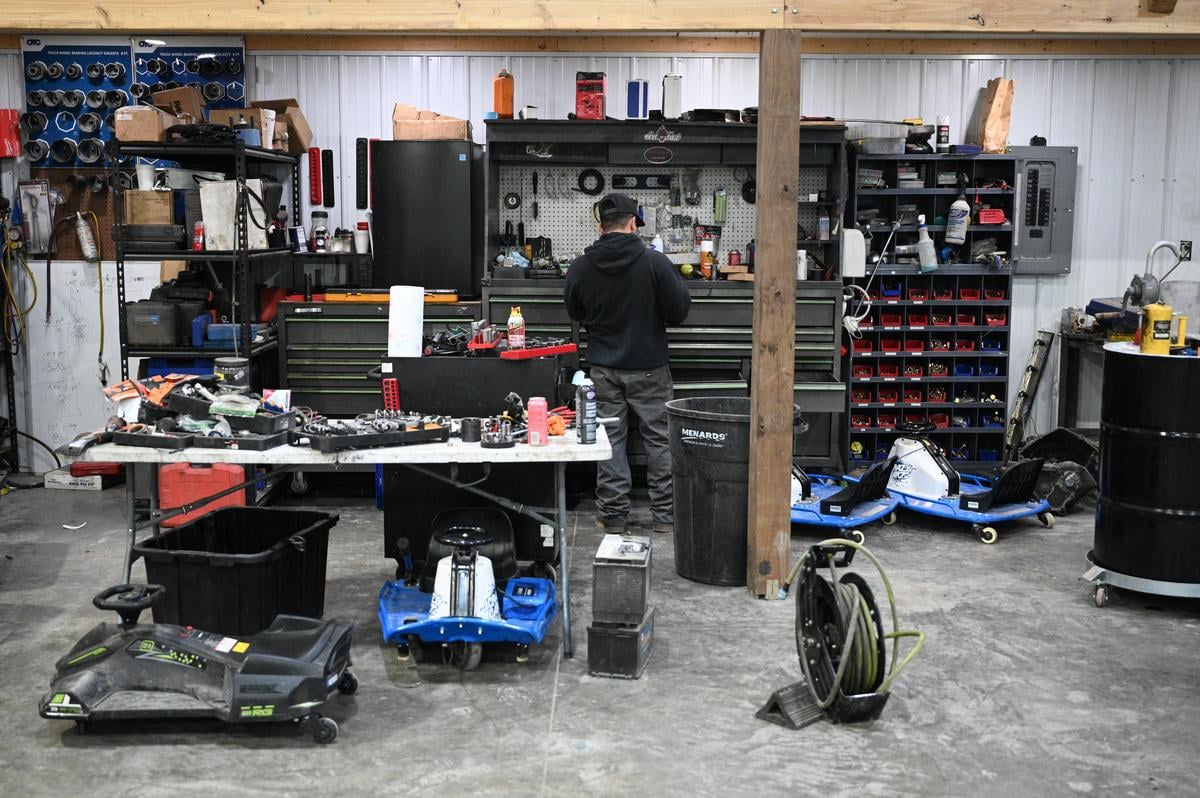
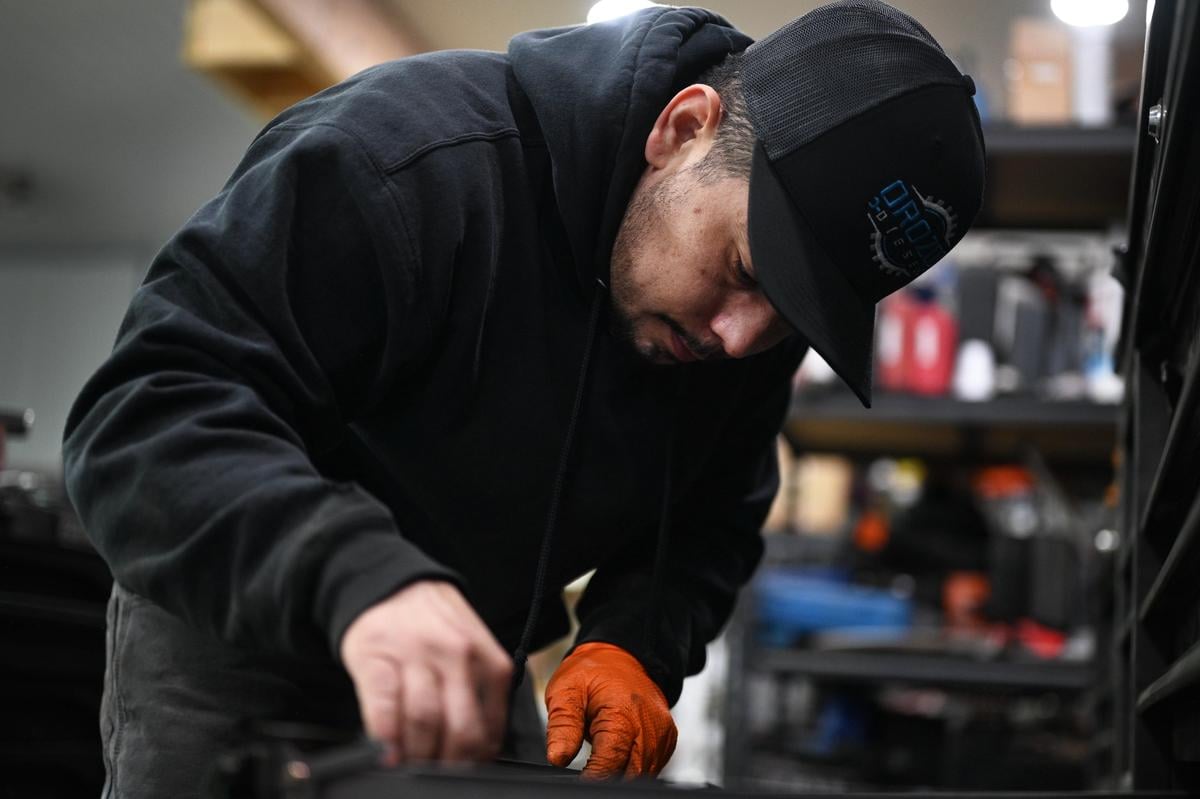
On Friday, one day after his release, Orozco-Ramirez told us he had already received calls from people eager to bring their trucks to his diesel repair shop.
“I gotta get back to work,” he said.
His diesel shop in Froid closed for nearly four months while he was detained. His time in detention, Orozco-Ramirez said, marked the first time in decades he had a break from work. Before moving to Froid, Orozco-Ramirez worked as a mechanic in Culbertson, a small agricultural town about 15 miles south of Froid. Once he saved up enough money, he said, he began looking to buy a home in the area. That’s how he found the one-story house in Froid, where he and his family have lived for more than a decade. In retrospect, moving to the small town of less than 200, Orozco-Ramirez said, was “probably one of the best decisions” of his life.
|
 |
|
Immigration courts function separately from criminal courts, so even though Orozco-Ramirez’s criminal case was dismissed in April and he won his civil case in May, he may still be ordered to appear in federal immigration court at some point. (Where criminal courts assess an individual’s guilt, immigration courts assess undocumented residents’ eligibility to remain in the country.) Johnny Sinodis, Orozco-Ramirez’s California-based immigration lawyer, said the process could take years but that Orozco-Ramirez will have the opportunity to apply for relief from removal. Christoffersen said she did not yet know when Orozco-Ramirez would be called to appear.
As of March, a backlog of about 3.3 million cases were pending before immigration courts, with priority given to people currently in detention, according to the Transactional Records Access Clearinghouse. Orozco-Ramirez’s 19-year-old son, Orozco Lazcano, plans to petition for his father to gain lawful permanent resident status once he turns 21. (U.S. citizens who are at least 21 years old can apply for their parents to live permanently in the country.) In the meantime, as Orozco-Ramirez awaits his immigration proceedings, his lawyers say federal immigration officials cannot legally detain or deport him unless circumstances in his case drastically change.
|
 |
|
Randy Tanner, a lawyer for the U.S. Attorney’s Office for the District of Montana, who represented various law enforcement and federal agencies in Orozco-Ramirez’s civil case, said on Thursday that his office was reviewing the judge’s order and could not comment on the case. Representatives from U.S. Customs and Border Protection did not respond to a request for comment.
Montana is home to one of the smallest immigrant populations in the country. When I asked Orozco-Ramirez what he wanted more people to know about what it’s like to be an immigrant in rural Montana, he told me that rhetoric surrounding immigration often generalizes people and furthers stereotypes.
“Saying every immigrant is here to work and do good would be a lie,” he said. “It’s a mix of people just like anybody else. If I was here doing something wrong, I mean, people are not dumb around here. They would figure it out right away. I think there’s absolutely two kinds of people but I feel like they just grab everybody and put them in a bucket. It’s, ‘That kid threw a rock and we’re gonna put everybody in a bucket just because that kid threw a rock.’ And it’s just not that way.”
|
|
|
|
Back to work
|
|
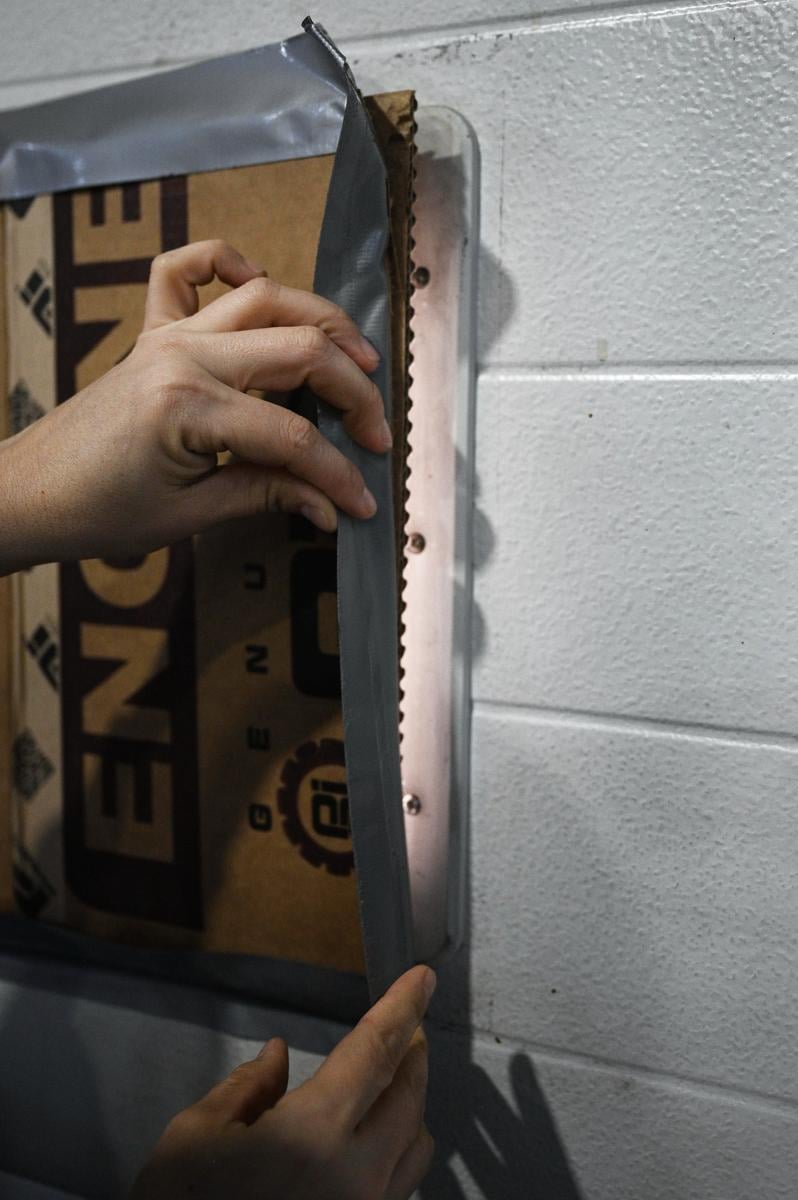
As Lauren and I left Froid on Friday afternoon, we stopped by Orozco-Ramirez’s diesel shop. Inside, Orozco-Ramirez organized car parts in drawers as his son swept dust off the floor. Outside the shop, sitting in a pile of trash, were two pieces of cardboard once duct taped over the shop’s windows to prevent Border Patrol agents from looking inside.
|
 |
|
Dust swirled in the empty dirt lot outside. Soon, Orozco-Ramirez said, he’d have 20 or 30 trucks parked there to work on.
|
 |
|
Reader dispatches
|
|
When I wrote about Orozco-Ramirez’s release from detention, I heard from many of you. Most people celebrated the outcome; others said they were upset by it. Many of you reflected on the nuance of the situation. Here’s what some of you shared. Some responses are lightly edited for length and clarity.
Gail Gilman of Missoula: “Oh, the relief and thankfulness I feel and tears I’m shedding … so, so glad to see some actual justice!”
Becky Piske of Helena: “I look forward to hearing about the journey to citizenship that Roberto [Orozco-Ramirez] will hopefully take to end this harassment by ICE. … Americans do love their community members.”
Denise Feller of East Helena: “All I can say is Judge Morris had better not put any American citizen in jail from now on. You can't let an illegal who broke our laws free if you won't let an American who broke our laws free. … Very sad for Montana. No one should have to go to prison after this mockery.”
Kristin Freeman, a Montana resident: “I am truly outraged at the manner of arresting and detaining people is being implemented by the current administration. When people are just needing some guidance, when they are not acting criminally, when they are contributing positively to the community, we MUST do everything possible to assist them in becoming citizens.”
Russell Sias of Columbia Falls: “Now that we have established that laws don't really matter, when do the rest of us get to pick and choose which laws we want to break and then expect little or no consequences?”
Becca Ritter of Bozeman: “People should be here legally. It's the law, and it's the only way to run a country. But humans are also complicated and have their own stories. … I am so happy for the Orozco-Ramirez family.”
Jill Joyce, of Gallatin Gateway, traveled to several of Orozco-Ramirez’s hearings to show support despite never having met him. She wrote in a recent Facebook post about why she took such an interest in his story. Here’s some of what she shared:
“I was moved. So much of the news today leaves me feeling helpless. Buy a sweatshirt? Call a senator? Share something on Facebook? It feels futile, and yet, the good people of Froid showed me what it means to be brave, to act. To do something. Anything.”
Thank you for reading this newsletter and please share your thoughts with our team at border@montanafreepress.org. And don’t forget to watch the Montana PBS special on Orozco-Ramirez here.
This newsletter was supported by the Pulitzer Center.
|
|
|
|
|
|
|
|
|