|
|
|
|
|
A proposal to build a 36-inch diameter pipeline to move Canadian oil to refineries and markets in the U.S. with notable similarities to the contentious Keystone XL pipeline has officially landed before state and federal agencies.
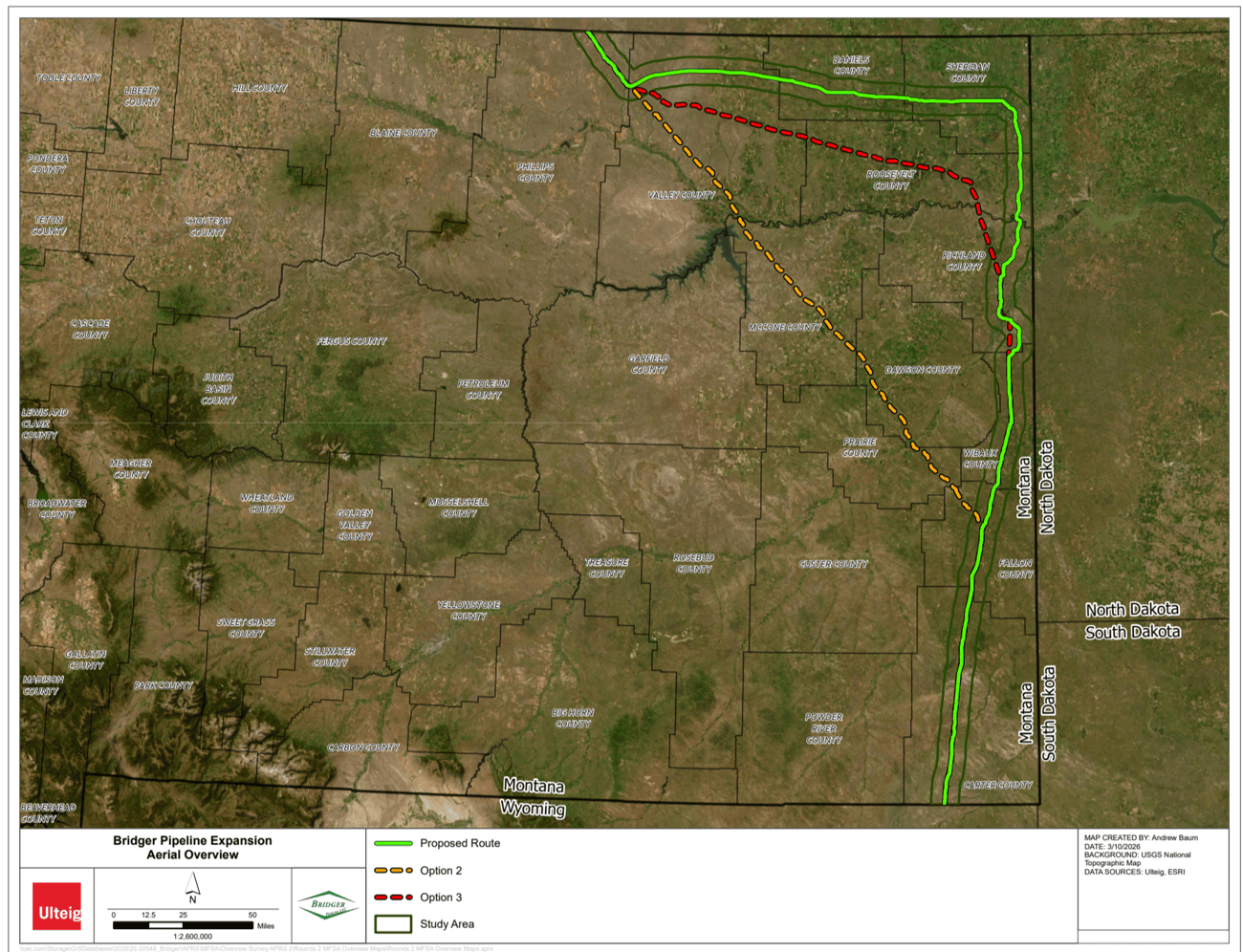
The Bureau of Land Management has opened public comment on the Bridger Pipeline, which would traverse nine counties in Montana to allow a Canadian oil producer to transport about 550,000 barrels of Canadian oil per day into “multiple U.S. delivery points.” The preferred route stretches from north of Malta to an intersection with an existing terminal in Guernsey, Wyoming. It would follow existing pipelines through much of that stretch.
|
 |
|
In planning documents, the Bureau of Land Management describes the Bridger Pipeline as creating a “significant and meaningful investment in the U.S. energy economy.” The agency, which administers land along some sections of the pipeline’s projected route through Montana and Wyoming, aligns with President Trump’s January 2025 executive order directing federal agencies to streamline permitting for energy projects.
But environmental groups warn that the proposal is suspiciously similar to the Keystone XL project that garnered more than a decade of intense pushback from tribes wary of the potential for water contamination and climate groups opposed to the greenhouse gas emissions associated with excavating and burning tar sand oil. Keystone XL would have cut across tribal land and water supplies to facilitate the movement of approximately 830,000 gallons of tar sands oil per day.
“Its an incredibly damaging way to extract oil; we’re talking about strip-mining for oil, basically,” Montana Environmental Information Center Deputy Director Derf Johnson said of tar sands oil extraction in an interview this week with Montana Free Press. “Climate scientists often refer to it as a ‘climate bomb’ in terms of the potential greenhouse gas emissions.”
If its project is approved, Bridger Pipeline would build eight new pump stations along the new 647-mile route that appears to align with a project Canadian company South Bow is pursuing on the other side of the U.S.-Canada border. A more fulsome analysis of the anticipated effects on water, wildlife and soil, as well as cultural and archeological resources, is anticipated later in the spring.
The project would need a presidential permit issued by the U.S. Department of State for the border crossing. The presidential permit for Keystone XL proved to be a key sticking point for that project. Three administrations weighed in on Keystone XL, putting the project on a permitting pendulum that was both dramatic and predictable. In 2021, President Biden canceled the presidential permit required for the border crossing after his predecessor, President Trump, reversed President Obama’s denial of the permit. Several months after Biden nixed the permit, TC Energy scrapped the project — but not before some construction had begun on the Canadian side of the border.
The BLM is taking comment on the proposal through May 1 on its e-planning website. The Montana Department of Environmental Quality, which is evaluating the project through the lens of state-specific environmental regulations, is hosting three public meetings on the proposal scheduled later this month. The first is in Glasgow April 14, followed by a second in Miles City April 15 and a virtual meeting on April 16.
|
|
|
|
|
|
|
 |
|
MTFP will be streaming live on Thursday, April 9, 2026, at 6 p.m. MT as part of our celebration of the first ever Local News Day, a national day focused on local news created by Montana Free Press founder John S. Adams.
Join Montana Free Press Executive Director John S. Adams in conversation with reporter Nora Mabie, reporter JoVonne Wagner, Editor-in-Chief Heather Tal Murphy and Report for America/Catchlight Local Photojournalist Lauren Miller for a live, behind-the-scenes look at how the team has been approaching coverage of immigration policy.
RSVP and submit your questions in advance here. |
| RSVP today! |
|
|
|
|
|
|
|
|
Earlier this year, a group of current and former state lawmakers who opposed the bipartisan property tax package passed by the Legislature in 2025 sued in state District Court in Bozeman over one key piece of legislation. Among other issues, the lawsuit argued that the Legislature had impermissibly lumped unrelated subjects in a single bill, Senate Bill 542.
In return, Gov. Greg Gianforte this month asked the Montana Supreme Court to intervene in the case to promptly settle some of the constitutional questions raised by opponents. On Tuesday, the higher court responded: no dice, governor.
The unanimous ruling, signed by all seven justices, said that the governor’s appeal had not clearly conveyed why the case was so urgent that the state Supreme Court needed to intervene.
“[W]e are confident that the District Court, which is well-equipped to consider the legal questions Governor Gianforte posits, may resolve the legal issues in a timely fashion and provide opportunity for appeal so long as the parties diligently litigate the case,” the court decision said.
In a statement to Montana Free Press, the attorney representing the plaintiffs in District Court celebrated the court’s dismissal and criticized the original legislation at issue.
“This wasn’t tax reform — it was a rushed rewrite of a bill that couldn’t survive normal scrutiny,” said Bozeman-based attorney Matthew Monforton. “The Supreme Court’s decision not to step in early speaks volumes.”
The state has until April 21 to file its response to the plaintiffs’ motion about how to resolve the case.
|
|
|
|
|
Mara Silvers
Interim Managing Editor |
|
|
|
|
|
|
|
By the Numbers 🔢
|
 |
|
|
|
The percentage of homes in Montana that saw a reduction in taxes because of property tax overhauls passed in 2025, according to a press release this week from Gov. Greg Gianforte and the Montana Department of Revenue.
Homeowners who saw a tax cut had savings of more than $500 on average, the release went on, while taxes remained flat for another 10% of the homes in the state. The release didn’t specify the average tax increase for the remaining 10% of properties.
All told, nearly 260,000 primary homes and 36,000 long-term rentals have been approved for a lower property tax rate under new policies passed by the 2025 Legislature, the release said. |
|
|
|
|
|
|
Montana is getting closer and closer to rolling out its new, significantly more complicated way of vetting how often Medicaid recipients work, volunteer or go to school — a rigorous set of “community engagement” standards for low-income people on the public health insurance program approved by Congress in 2025.
All states are federally required to notify Medicaid enrollees about what’s going on. Now, Montana’s Department of Public Health and Human Services has launched a website about the upcoming changes slated to begin July 1.
The state’s landing page explains that the changes, which include reporting 80 hours per month of approved activities and reevaluations every six months, are intended to achieve the following goals:
-
Help people become more independent and rely less on government support
-
Increase workforce participation and improve job skills
-
Use public resources responsibly and increase personal responsibility
According to state data, the vast majority of Montana Medicaid recipients already work, go to school or are full-time caregivers for a family member or dependent. The state has also pledged to faithfully roll out a suite of exemptions outlined by Congress. American Indians, for example, are not subject to the new requirements, nor are people with a substance use disorder, those recently released from prison or people who are “medically frail,” a term that has not yet been defined by federal health officials.
Medicaid experts in Montana and nationwide have stressed that the work requirements have the potential to disqualify people from Medicaid, even if they are eligible, simply because of impassable bureaucratic hoops and hurdles. Health researchers have suggested that how the state rolls out the new protocols — whether through websites, by phone or other outreach — will be the true test of whether eligible people will be given a chance to keep their health care.
The state health department’s website says recipients will receive “timely and adequate notice” about whether they have been found noncompliant with the new work requirements or have been deemed ineligible for coverage. All people removed from the Medicaid program will have a chance to appeal through an administrative hearing.
The department is directing Medicaid beneficiaries to keep the state apprised of any changes in residence, household size or income through the state Medicaid portal (apply.mt.gov), the state Public Assistance Helpline (1-800-318-2596), by mail (Human and Community Services Division, PO Box 202925, Helena, 59602-2925) or through an in-person consultation at their local Office of Public Assistance. |
|
|
|
|
Mara Silvers
Interim Managing Editor |
|
|
|
|
|
|
|
The Gist 📌
|
 |
|
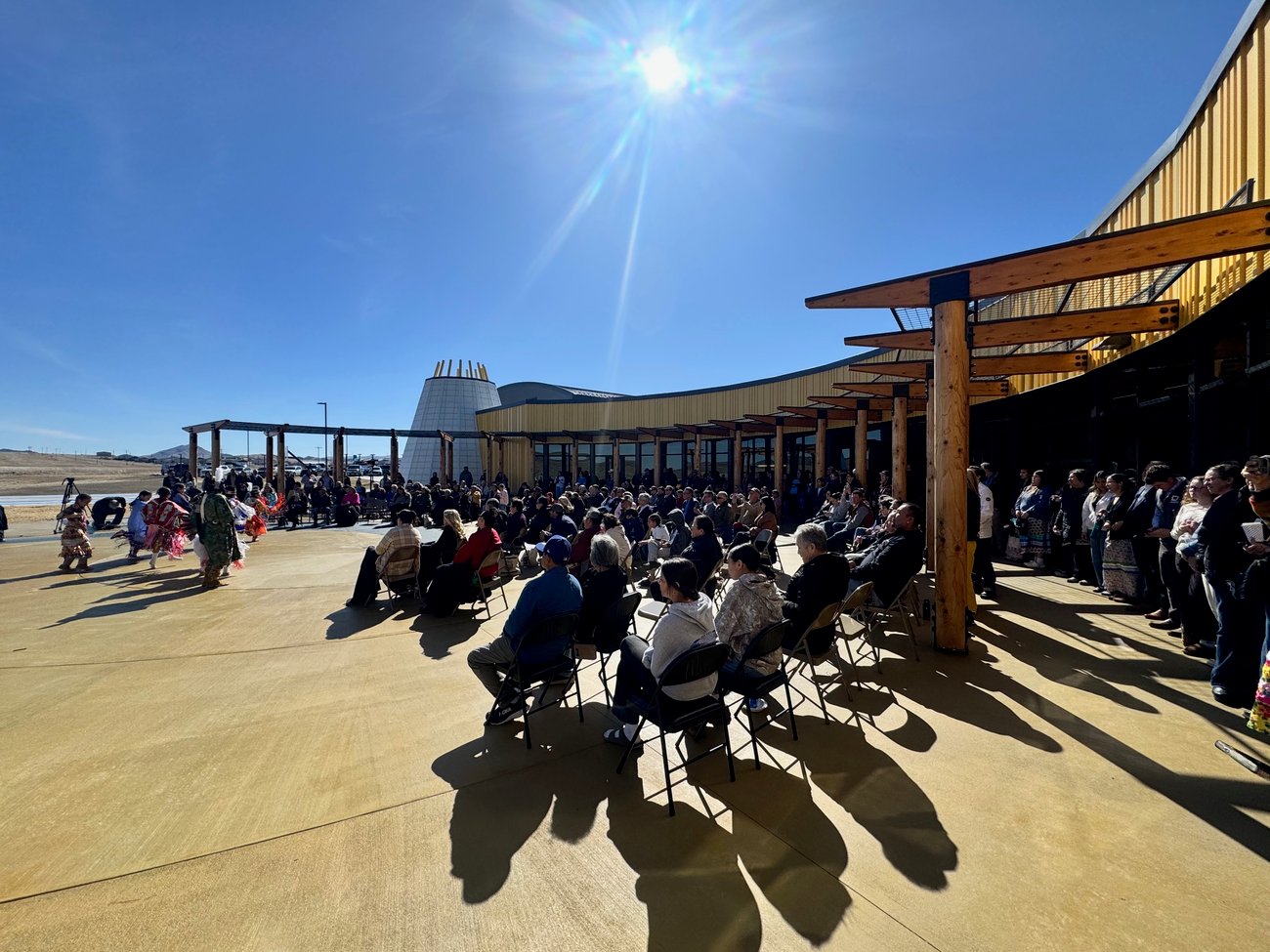
People gathered on the Rocky Boy's Reservation March 27, 2026, to celebrate the opening of the Miyo Pimatisiwinkamik Youth Wellness Center. Credit: Tara Jensen
|
|
|
|
The Rocky Boy Health Center last week opened the Miyo Pimatisiwinkamik Youth Wellness Center, a new 30,000-square-foot facility that will offer preventive care services, serve as a hub for language and culture revitalization efforts and host a variety of recreational activities. (“Miyo Pimatisiwinkamik” is Cree for “Good Life Lodge.”)
“I’ve been calling it a prevention facility,” said Melody Henry, who will oversee the wellness center. “We wanted a safe place for our children. We wanted a place where they could learn their strengths and be supported.”
Henry said the plan for the center was informed by community surveys, in which many young people reported wanting more things to do for fun on the Rocky Boy’s Reservation. She said the facility will host a variety of activities, including recreational football, golf, rodeo, dance and art classes, among other things.
“These are things that a lot of our people are not necessarily exposed to because of our rural location,” she said. “We want to bring that here, so the kids can learn about and enjoy new things.”
Rocky Boy Health Center CEO Joel Rosette said the youth wellness center was funded primarily through tax credits and third-party revenue from billing private insurance companies and Medicaid. The center will rely on insurance payments for its medical services, along with private donations, to help sustain its other programming, Rosette said. Investing in youth, he hopes, will build a strong foundation for the community.
“These are our future leaders,” he said. “We get a chance to shape and grow them in a place that’s safe.” |
|
|
|
|
|
|
A Montana Tech anthropology professor last week testified before members of the Legislature’s interim energy committee on the subject of “extratempestrial time travel.” Michael Masters, who shared his theory on Joe Rogan’s podcast in December, described it as the notion that aliens that have been described in various encounters may be “distant human descendants coming back through time to visit and study their own past.”
Masters appeared before the committee at the request of its chair, Daniel Zolnikov, R-Billings, who said he has a personal interest in the subject given the vast technological advances that wouldn’t have been imaginable to previous generations.
At one point in the discussion, Masters described the idea of humans having sex with aliens. He said that would, by definition, make aliens and humans the same species.
“Believe it or not — I told you this was going to get weird — there are a lot of instances where one-on-one reproduction is described: People actually having sex with these aliens,” Masters told committee members. “If there is actual hybridization happening — and that is also very commonly described in these encounters — by definition, these would be us. These would be the same species.”
Masters drew just a couple of questions from lawmakers after his presentation, which incorporated a discussion of a UFO sighting in 1940 reported by a man who lived near Canyon Ferry.
Afterward, the committee then turned to subjects more in line with its usual programming, discussing draft legislation to restructure Montana’s utility board. |
|
|
|
|
|
|
Snapshot 📸
|
 |
|
|
|
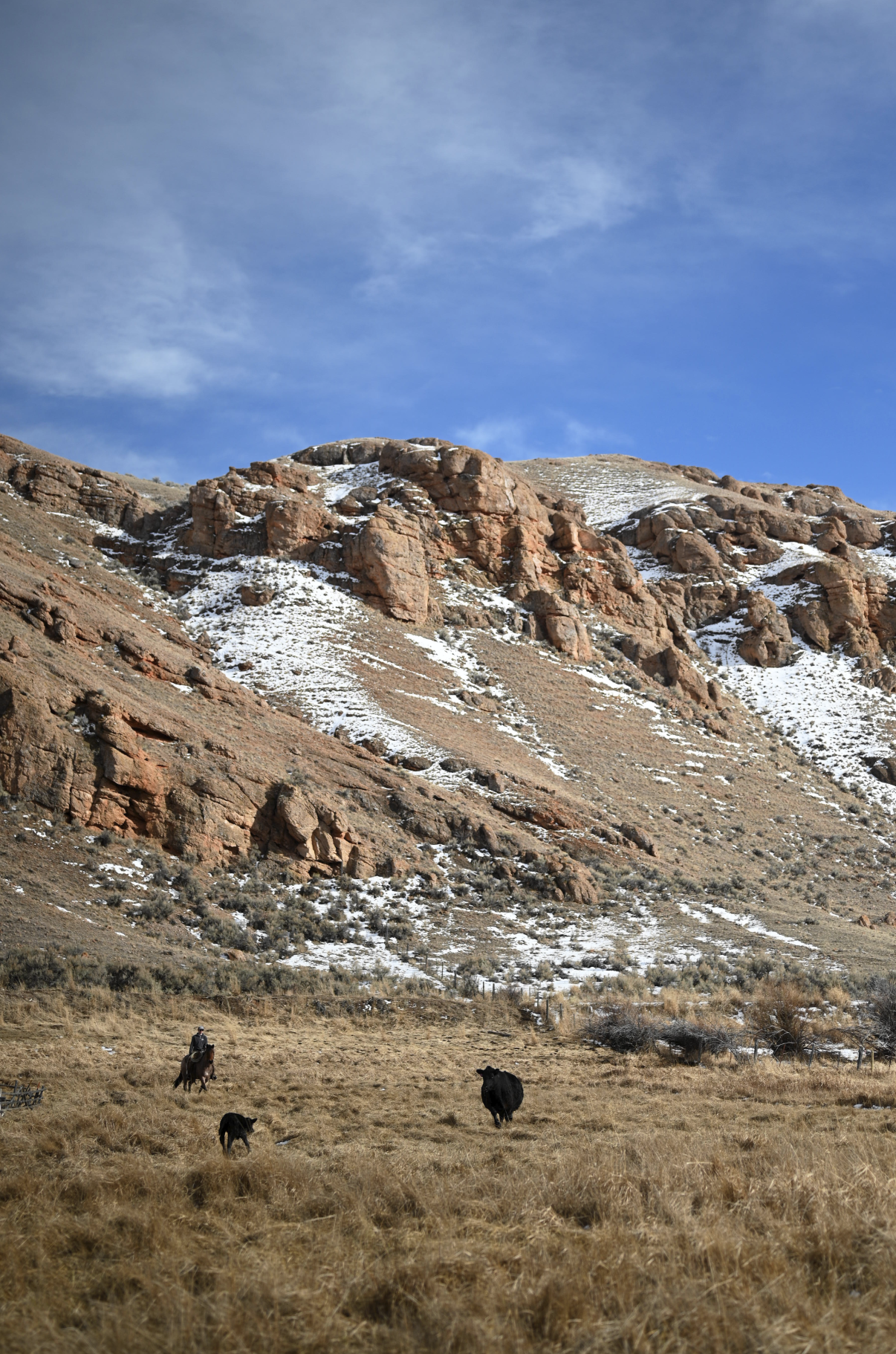
Without giving too much away on the purpose of this reporting trip, I made this image last month at the beginning of calving season on the Martindale Ranch in Dell.
|
|
|
|
|
Lauren Miller
Report for America/Catchlight Local Photojournalist |
|
|
|
|
|
|
|
|
On Our Radar 
|
|
|
Amanda — “The Correspondent” uses a series of letters and emails to create little portals into the people and events that shaped the main character’s life. I was initially skeptical of the premise, but I found myself loving the protagonist’s peccadillos and acts of generosity. I’m now hunting for another novel to squeeze a little more delight and insight out of the winter/spring reading season.
Nora — Speaking of aliens … I saw “Project Hail Mary” in theaters the other night, and it was SO GOOD! It’s got everything you’d want in a space movie: a high-stakes mission to save the world, a snarky alien and, of course, Ryan Gosling.
Mara — If you’re looking for a delightful read about the gritty charm of straight-up, old-school, shoe-leather local journalism, boy, do I have the story for you.
Zeke — I spend a lot of time browsing the Associated Press’ website. I am charmed by its oddities section, a blend of eye-catching happenings and verified lore. My favorite stories from Thursday: “Heavyweight boxer Derek Chisora rides army tank with Nigel Farage to press event” and “World’s oldest known tortoise still very much alive despite rumor to the contrary.”
Lauren — Chris Fleming's physical, fabulous and fantastical HBO special “Live at the Palace” was released nearly a month ago, but my social media algorithm keeps serving me up delicious bits from his press tour that make me both cackle from the absurdity and tear up over his earnestness. In this bit on NPR’s show “Wild Card,” Fleming and host Rachel Martin discuss the power and symbolism of birds.
*Some stories may require a subscription. Subscribe!
Lowdown is edited by Nick Ehli, with additional copy editing this week from Mara Silvers.
|
|
|
|
|
 |
|
Montana Free Press reports from communities all across our state, and Local News Day is the day when you can help connect your friends and neighbors to quality news from a source you trust.
As a way of saying thank you for spreading the word, we're giving away a free gift to anyone who gets their friends to sign up for one of MTFP's local or statewide newsletters! Click here to learn more! |
| Share MTFP with a friend! |
|
|
|
|
|
|